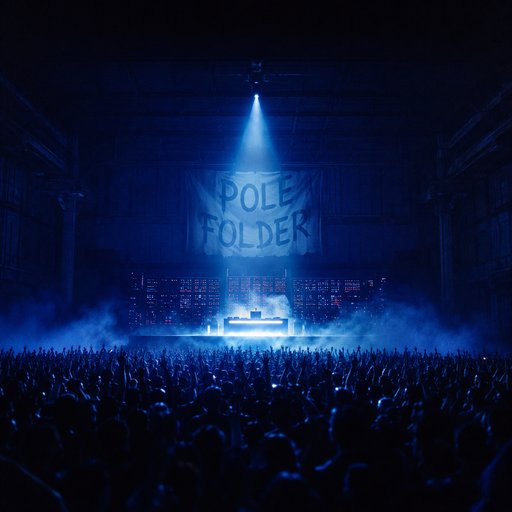
Pole Folder — Pole Folder - Reworck Label night at Café d'Anvers - June 2013
Melodic Techno · 1h 54m · analysed 25 Aug 2026 · source: soundcloud.com
Public mix analysis — no affiliation or endorsement. This report measures a publicly available recording hosted on soundcloud.com. The scores are produced by SOONOS and do not imply any partnership with, or approval by, Pole Folder.
In short
Pole Folder - Reworck Label night at Café d'Anvers - June 2013 by Pole Folder scores 70/100 in the SOONOS analysis (solid). The strongest dimension is IDENTITY (90/100) and the weakest is SURPRISE (81/100).
You aren't just playing tracks; you are weaving a sonic tapestry that respects the listener's intelligence.
Key takeaways
What weakened the set
- Long static loops (6×) — Sections sitting on the same loop without layering, EQ moves or tension shifts (0:00, 13:00, 19:00, 25:00, 31:00, 35:05). Long loops kill dancefloor momentum.
What to try next
- Continue the long-blend technique as it is your strongest technical asset.
- Experiment with brief, high-impact silence or 'cuts' to contrast the long blends.
- Introduce a vocal-led track in the next 20 minutes to provide a narrative anchor.
- Experiment with subtle polyrhythms to add another layer of complexity to the hypnotic groove.
Timestamped insights
Each moment below is tagged with how it was produced: “measured” comes from the DSP pass on the audio, “listening” comes from the multi-agent listening pass.
A textbook example of a 'ghost' transition where the tracks merge perfectly.
Smooth introduction of the third track, maintaining the atmospheric tension.
Perfectly executed long blend; the transition is felt rather than heard.
Smooth transition into a more percussive track, maintaining the hypnotic groove.
Seamless transition that preserves the hypnotic flow.
Smooth introduction of industrial textures.
About this melodic techno set
Pole Folder - Reworck Label night at Café d'Anvers - June 2013 is a melodic techno DJ set by Pole Folder, running 1h 54m. It was measured by the SOONOS multi-agent engine and scores 70/100 overall — solid.
The engine files this performance as “Promising”.
You aren't just playing tracks; you are weaving a sonic tapestry that respects the listener's intelligence.
How the score breaks down
SOONOS scores this set across 5 weighted categories. The strongest is IDENTITY at 90/100; the weakest is SURPRISE at 81/100.
The final score is capped by measured beatmatching: the DSP layer overrides the listening layer whenever it measures an execution issue directly in the audio.
Analysis coverage for this file is 100% — the share of the set the engine could measure with full confidence.
Energy and structure
The energy curve was sampled at 65 points, moving between 40 and 85 on the SOONOS energy scale — a wide dynamic range across the set.
6 transitions were detected and scored individually.
Beat-grid measurement (DSP) reports 153.7 grid breaks per hour, with a median beat offset of 29 ms.
How this score is built
Measured layer (DSP): the audio file is analysed directly — beat grid, tempo stability, loudness and energy. These values are measurements, not opinions.
Listening layer: a multi-agent pass reads musical intent — programming, storytelling, coherence and crowd effect. This layer interprets, it does not measure.
Fusion and ceilings: the two layers are merged, and the measured layer always wins on execution. When the DSP hears an execution problem, it caps the final score even if the listening layer is positive.
On this set, the ceiling applied is measured beatmatching.
Measured coverage for this file is 100% of the set.
Full SOONOS analysis
You aren't just playing tracks; you are weaving a sonic tapestry that respects the listener's intelligence.
The 8 dimensions
Not available — the 8-dimension profile was not measured for this set.
Score breakdown
TECHNIQUE
How well did you execute?
25%84
TECHNIQUE
How well did you execute?
STORYTELLING
Did the mix go somewhere?
25%88
STORYTELLING
Did the mix go somewhere?
ENERGY
Did you control the room?
20%85
ENERGY
Did you control the room?
SURPRISE
Did you remain unpredictable?
15%81
SURPRISE
Did you remain unpredictable?
IDENTITY
Did the mix sound like you?
15%90
IDENTITY
Did the mix sound like you?
Final score capped by measured beatmatching — the weighted average before the cap was 86.
Energy arc
Transitions analysed (6)
Long EQ blend with low-end swap on phrase
A textbook example of a 'ghost' transition where the tracks merge perfectly.
Progressive layering with high-pass filtering
Smooth introduction of the third track, maintaining the atmospheric tension.
64-bar EQ blend
Perfectly executed long blend; the transition is felt rather than heard.
Progressive layering with high-pass filtering
Smooth transition into a more percussive track, maintaining the hypnotic groove.
Long EQ blend, swapping lows at the end of a 32-bar phrase.
Seamless transition that preserves the hypnotic flow.
Filter-assisted blend with mid-frequency focus.
Smooth introduction of industrial textures.
Technical subscores
86
EQ balance
93
Beat alignment
86
Energy control
94
Tempo stability
85
Loudness control
91
Musical coherence
90
Harmonic compatibility
89
Transition cleanliness
Measured (DSP)
29 ms
Beat-grid drift (median)
Typical gap between the two tracks' beats while they play together. Lower is tighter.
43 ms
Drift p95
Worst-case drift: 95% of the set stays tighter than this value.
6,842
Boundaries detected
Points where the audio changes track or section.
16
Hard cuts / h
Abrupt track changes per hour, with no blend between the two records.
2
Clipping events
Moments where the recording hits the ceiling and distorts.
99
Level jumps
Sudden volume steps between tracks.
Measurement confidence 100% · analysed on the full audio.
Recurring patterns
Long static loops (6×)
Sections sitting on the same loop without layering, EQ moves or tension shifts (0:00, 13:00, 19:00, 25:00, 31:00, 35:05). Long loops kill dancefloor momentum.
Timeline
- 04:45The Invisible Handover
- 09:15Tension Peak
- 14:45Groove Lock
- 21:30Atmospheric Peak
- 27:20Tension Peak
Coaching notes
- Continue the long-blend technique as it is your strongest technical asset.
- Experiment with brief, high-impact silence or 'cuts' to contrast the long blends.
- Introduce a vocal-led track in the next 20 minutes to provide a narrative anchor.
- Experiment with subtle polyrhythms to add another layer of complexity to the hypnotic groove.
- Use delay-based FX more aggressively during transitions to create a sense of 'bleeding' between tracks.
- Consider a brief 'silent' breakdown (kick-free) to reset the room's energy before a major peak.
- Experiment with brief, high-frequency percussive stabs to add 'sparkle' to the mix.
- Use the 64-bar blend technique to introduce more complex polyrhythms.
- Consider a 'reset' moment in the next segment to refresh the crowd's ears.
- Use subtle high-frequency modulation to add 'sparkle' to long percussive loops.
- Experiment with slightly more aggressive filter work during breakdowns to create more dramatic tension.
- Consider introducing a very sparse melodic element to provide a narrative anchor.
- Maintain the long-blend technique as it is a core strength.
- Experiment with more dramatic EQ filtering during breakdowns.
- Introduce a 'wildcard' track to add a layer of surprise to the set.
Curious how your own set scores?
Methodology and limitations
This report is produced automatically from the published recording. It measures what is present in the audio file: a bad source encoding, a partial upload or a heavily processed broadcast version can change the measured values. Nothing here reflects the room, the crowd or the night itself.
Read the full SOONOS methodology →Questions about this analysis
- What score does Pole Folder's Pole Folder - Reworck Label night at Café d'Anvers - June 2013 get?
- Pole Folder - Reworck Label night at Café d'Anvers - June 2013 scores 70/100 in the SOONOS Mix Database (solid), based on audio measurement plus multi-agent listening.
- How long is Pole Folder - Reworck Label night at Café d'Anvers - June 2013?
- The analysed recording runs 1h 54m.
- Which part of the mix scores best?
- IDENTITY is the strongest category at 90/100, while SURPRISE is the lowest at 81/100.
- How is this score calculated?
- SOONOS measures the audio with a DSP pass (beat grid, loudness, tempo, energy) and runs a multi-agent listening pass on top. Measured axes always override the listening layer, so an execution issue heard in the file caps the final score.
More Pole Folder sets analysed
- Opening Set - Hernan Cattaneo At The Beach - July 202387
- Pole Folder - Live at Café d'Anvers - January 201284
- Pole Folder - Bahrein Buenos Aires - 30.03.2013 - Part 283
- Pole Folder - Woodstock69 06.04.2014 - Part282
- Pole Folder-Brussels 11.10.2014-Part 282
- Destinations April 2019 - Locals District Festival_ India77
- Houtbaar Haarlem - July 202573
- Desert In Me - Streaming Home Session70
Similar melodic techno sets
- Tale of Us — Afterlife Voyage 013 by Tale Of Us69
- Stephan Bodzin — Stephan Bodzin (live) - Awakenings Sunday Closing ADE 202471
- Solomun — Christmas in Bed 202568
- Maceo Plex — Maceo Plex - Essential Mix - November 201572
- Maceo Plex — Maceo Plex 90min set @ Boiler Room Berlin 17-09-201472
- Solomun — Christmas In Bed 202468
- Solomun — Christmas In Bed 201968
- Innellea — Innellea Live at Experts Only Loveland Amsterdam ADE 202573
Test how a set like this one would land in a club, a beach club or a festival.
Get the same breakdown on your own set: transitions, energy arc and measured execution.
Guides: How SOONOS works · DJ guides and research